
Why the Source of Your Cannabis Products Matters More Than You Think
A natural label does not necessarily mean a natural product. Between the point of origin and the destination, there are several critical points where quality can be compromised, and most of them occur well before the product reaches its packaging. When it comes to botanicals, the primary concern is not whether it is illegal or not, but rather whether what is on the label is actually in the product.
Labels are a secondary concern
It is the marketing department that makes the pretty claims on the front of the package; it is the growers and processors that make them come true. Take a jar of oils or isolates with a claim of being full-spectrum, organic, or lab-tested; odds are, the plant it came from was fed synthetic salts, dosed in unregistered pesticides, or extracted with solvents that left behind harmful residues.
This is not some far-fetched conspiracy theory, either. In 2017, Bonn-Miller et al. published in JAMA that 70% of tested CBD online products were misbranded in terms of CBD content. Some contained significantly more, some significantly less than stated on the label, and a whopping 21% contained detectable amounts of THC not mentioned anywhere.
It is best to think of this as not a brand issue but a supply chain issue, one where few links were keen on making detailed inquiries at any step of the way.
We are not asking you to put blind faith in what you buy in a bag or a bottle. In fact, it is essential to ask specific questions, not as a consumer but as an investigator, before making any purchase. We have narrowed it down to six most important questions to ask, in order of priority:
1. How was it grown?
It all starts with cultivation, an aspect most often neglected by the consumer. When it comes to cannabis and hemp, the plants are essentially accumulators, meaning that they absorb anything and everything from their environment. If the root system takes it up, it is in the plant, regardless of whether it is good, bad, or indifferent. From there, it can be concentrated further, depending on the stage of flowering and the maturity of the plant.
Ask whether the grower uses living soil and beneficial bugs to fight pests or if they resort to chemical insecticides to keep them away. Ask whether they used growth regulators to boost the yield. Plants fertilized with chemical salts and grown in peat will have a different cannabinoid and flavonoid profile than those fed with compost and mineral-rich water.
Living soil and integrated pest management can increase root mass, which, in turn, provides more surface area for nutrient uptake. The resulting flower will have a broader spectrum of minor cannabinoids and terpenes, not for the medicinal benefit they provide (though there is that too), but for the synergy with the rest of the plant.
Any reputable grower will be able to provide information about their growing medium, pest control measures, and growth regulators, if any. If they hesitate or give a vague answer, it should raise some suspicion, for they do not know much about what is in their product.
2. Can I see the certificate of analysis?
It is the most vital piece of information anyone purchasing CBD, THC, or any botanical supplement can ask for, and most will not get an answer. Certificates of Analysis, or COA, are the reports provided by an independent laboratory upon request that state the cannabinoid content and potential contaminants such as pesticides, heavy metals, mold, and bacteria.
There are two things to look for when it comes to COAs: a) the batch-specific analysis that pertains to the one you are purchasing, not the generic one the company reposts on their website for all products, and b) that it is provided by an independent laboratory that has nothing to do with the company itself.
The last thing a company wants is for another entity to find out that their product is, in fact, contaminated. If they cannot provide a COA upon request, there is no point in continuing the conversation, for it is an outright lie.
3. Full-spectrum or isolate? Does it say so?
It is a very nuanced discussion, perhaps one worth having in another article, but the short answer is that full-spectrum products contain all parts of the hemp or cannabis plant, whereas isolates are comprised of a single cannabinoid (most often CBD). The same goes for terpenes, with full-spectrum retaining all of the desirable volatile oils present in the plant, while isolates have them removed.
The full-spectrum products allow for the synergistic effects of cannabinoids, also known as the entourage effect. It is entirely up to the consumer to decide which type they prefer, but the most important takeaway is that what is on the label should reflect what is in the bottle.
Labels and product descriptions are easier to compare when you can ask questions before buying. For readers shopping locally in California, a modesto dispensary provides a physical place to look over available products and ask about the distinctions between them.
It is entirely possible, however, for a product to be misbranded on purpose, as the JAMA study showed. A product claiming to be full-spectrum could have had its cannabinoids extracted with solvents that removed all THC, leaving little to no entourage effect. The COA will be beneficial in this case, for it will show whether there are other cannabinoids present, such as CBG, CBC, CBN, or CBD.
4. How was it extracted and filtered?
CO2 extraction is the gold standard in terms of obtaining cannabinoids and terpenes, as it is efficient and leaves little to no residual solvent in the final product. It is also safer, as it does not involve exposing plant material to high temperatures, which can cause some cannabinoids and terpenes to be burnt and lost in the process.
Ethanol extraction is also viable, provided that the post-extraction process is done correctly. Butane and propane are considered inferior and highly dangerous and should be avoided at all costs, as they leave behind highly toxic solvents in the product, which can be potentially lethal in large enough doses.
The other concern is with terpenes, which can be filtered out, leaving cannabinoids in an isolate form. It is entirely up to the manufacturer to decide whether to retain them, for they are, indeed, desirable in most cases. A transparent company will tell you exactly how their product is made, so asking is a must.
5. What is the harvest date, and how was it stored?
Cannabinoids and terpenes have a shelf life, and it is essential to pay attention to dates, ideally on the packaging itself. THC converts to CBN over time, which may produce a different sensation than THC. Similarly, terpenes are highly volatile and will degrade over time when exposed to sunlight, losing their desirable aromas and flavors. If you have ever cracked open a fresh bud and wished that one had done it a week earlier, you know what I am talking about; a flat, stale scent and an almost nonexistent aroma are often indicative of poor storage practices.
The harvest date, or at least an expiration date, is the most straightforward performance metric for any cannabis or hemp product, aside from lab results. Some stores will not have this information, and if they do not, it should prompt further questions, for they do not care to be transparent. Shelf-life estimations, user reviews, and general feedback are all well and good, but a good rule of thumb is to ask yourself if you would buy a six-pack with no expiration date on the bottle. There are products and companies at every price point that operate on this philosophy, and some of them even go as far as “curing” their product as an excuse not to be transparent.
The best practice is to store cannabis and hemp flowers in a cool, dark, and dry place. A proper storage environment is crucial for preserving desirable aromas and flavors and ensuring potency.
This is where seed-to-sale tracking becomes useful, for it allows for a degree of traceability that goes beyond the retail level. State-mandated systems track the plant from the moment it is put in the ground until it reaches the consumer, providing essential information about the growing environment, the strain, and, most importantly, the harvest date. If in doubt, the lot number should provide all of that information and more, for it reflects the level of transparency a company is willing to provide.
6. What certifications does the company have?
Licensing is a bare minimum, for it is the floor below which any cannabis-related business cannot exist. It is a regulatory tool used by states to monitor the industry, but it does little in terms of ensuring quality beyond that. There are many brands that operate on a bare minimum, and many that go above and beyond, but how can an unassuming consumer tell the two apart?
That is where voluntary certifications come in, for organizations that provide them set a much higher standard in terms of quality and transparency. The Good Manufacturing Practices, or GMP, standard is most common for cannabis but comes with a set of rigorous guidelines about production and labeling that goes beyond what is required by the state.
Certifications such as organic or kosher denote a higher level of process control, where facilities are held to a standard superior to local regulations. While organic certification only audits the cultivation process, kosher has to do with production, where ingredient sourcing, preparation, and storage are inspected by an independent agent. Both are useful, for they demonstrate a level of commitment to the trade that goes beyond a bare minimum, ensuring better quality control from seed to sale.
It is essential to note that none of the certifications are mandatory, for they are entirely voluntary on the part of the company. That is a good litmus test in and of itself, for a company that is confident in its operations will not hesitate to seek them out, while one that is not may avoid them altogether.
Traceability ties everything together
We have covered the six most important questions in depth, but what ties them all together is one overarching question: Can you trace the product to a specific farm, a specific batch, and a specific practice? This is what seed-to-sale tracking and traceability provide, and that is what sets shady operations apart from honest growers. It is a tool that allows for navigating the murky waters of cannabis production, where regulations are still developing, as well as putting responsibility on the manufacturer rather than the consumer.
A company that is transparent about its practices will be able to answer these questions with ease, whereas a company that is not will make you jump through hoops to get an answer, if they give one at all.
Shopping tips
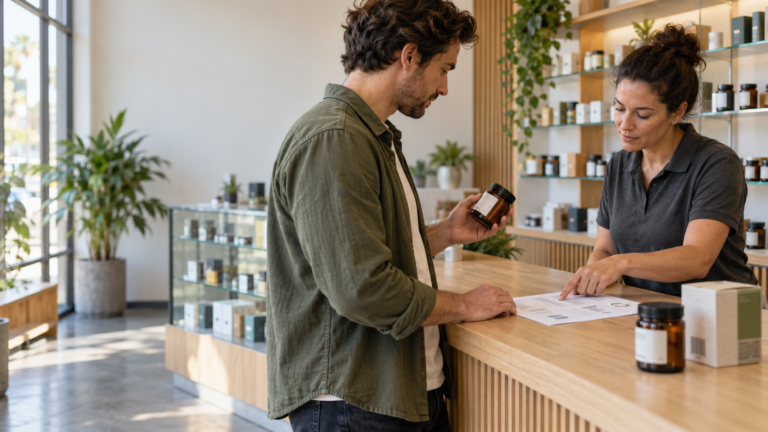
Shopping online poses a challenge to answering all six questions, as you are dealing with an entity that has little to no skin in the game. Buying in person allows you to ask the questions to someone who actually cares, especially if it is a local dispensary. It is entirely possible to ask a budtender to show you the COA in person if you are shopping locally. They can provide you with the date of harvest or cultivation, information about the grower, and much-needed insight into the production process.
It is the best option, as in-person shopping allows you to ask the questions and receive answers in real-time. This is not possible online, which is why shopping from an established business with a physical address is much safer than an anonymous website. It is even possible to have the information verified by another party, if you are ever in doubt.
To wrap it all up
None of the six questions posed in this article require a degree in chemistry to be asked and understood. What they require is a degree of transparency on the part of the seller, which, as we have seen, is often difficult to come by. The supply chain is a fragile thing, and any weak link in it compromises the whole, which is why it is essential to understand the production process from start to finish. Next time you are faced with a bold label claim, do not ask yourself if it sounds good. Ask yourself if it can be proven.
That is the difference between marketing fluff and actual transparency, and it is the best thing you can do for yourself as a consumer.